Jim Collins studied 1,435 companies and found eleven that made the leap to great. I keep a shorter list: the ones that fell afterward. Their collapses aren’t a refutation of Collins — they’re a stress test. Each company failed at a principle it had once embodied.
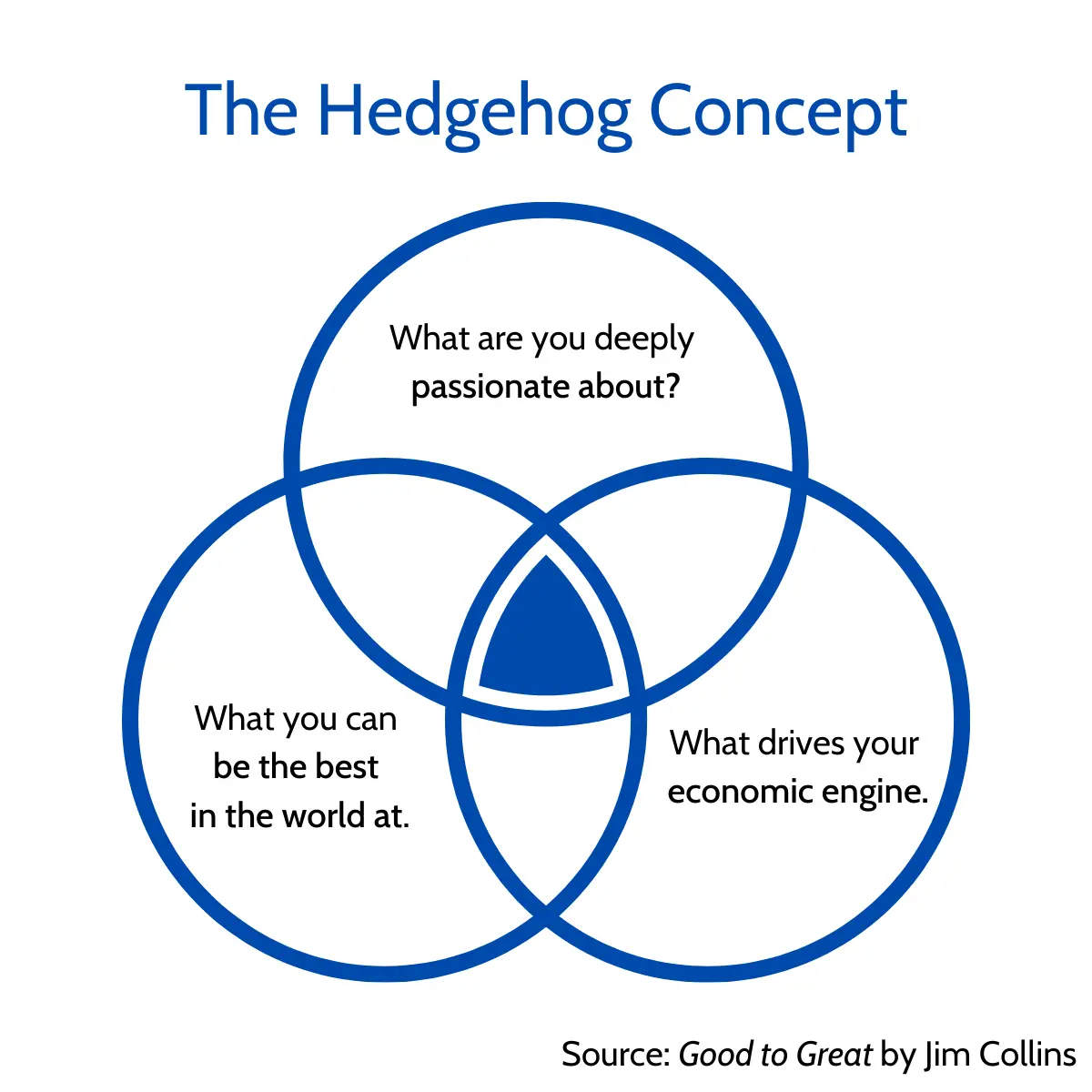
- The Hedgehog Concept is a discipline, not a diploma. Fannie Mae’s Hedgehog was mastering mortgage risk. It then chased growth into risk it couldn’t actually price, and manipulated its accounting to hide the gap. Claim a competence you’ve lost, stop confronting the brutal facts, and the flywheel spins backward. Federal conservatorship followed.
- “First Who” runs in reverse, too. In 2007, Circuit City fired 3,400 of its most experienced, highest-paid salespeople to cut costs — replacing them with hires who, per the company’s own listings, needed “no sales experience.” They took the right people off the bus on purpose. Bankrupt within two years.
- A culture of discipline is not a culture of pressure. Wells Fargo turned its celebrated cross-selling engine into coercive quotas — “eight is great.” Discipline curdled into fear, and roughly 3.5 million unauthorized accounts followed. The metric survived; the integrity behind it did not.
Here’s the honest caveat: a portfolio of Collins’s eleven would have underperformed the S&P 500. The book has a genuine survivorship-bias problem, and I won’t pretend otherwise. But that’s exactly why the failures teach more than the wins. Greatness isn’t a status you earn once and keep. It’s a set of disciplines — and the moment you treat them as trophies instead of daily practice, the doom loop is already turning.
— Ty West